The National Archives
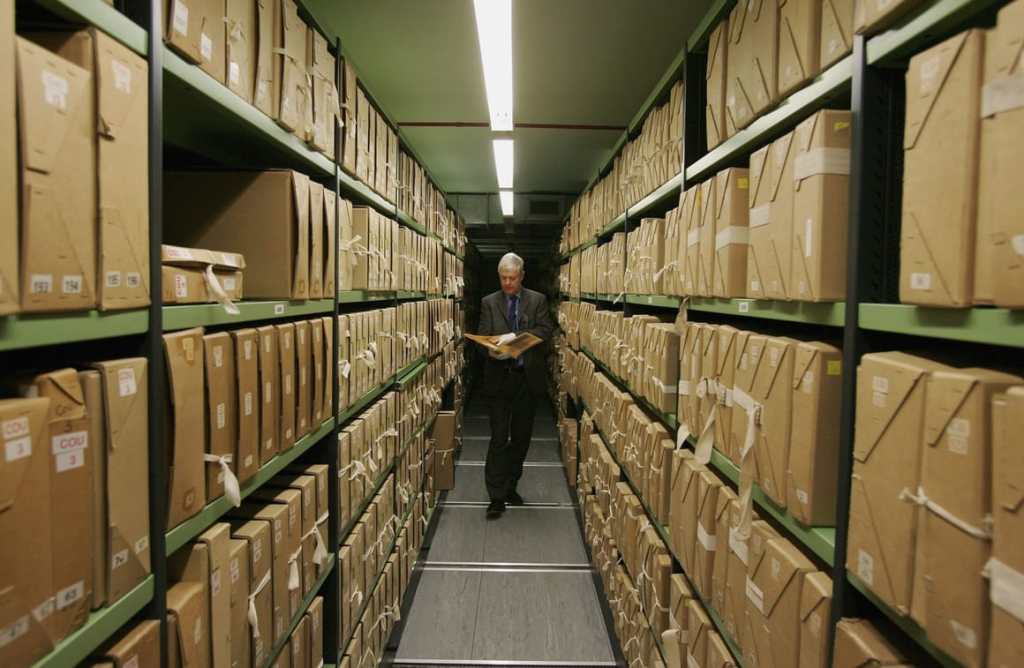
The National Archives holds over 32 million historical records, including government documents, legal papers, and digital collections. The original website and archival catalogue were outdated, presenting significant usability challenges for researchers, legal professionals, and the general public.
My role
My role as Senior UX Designer was to lead the UX design and user research and testing for the National Archives and improve their web and mobile products. I led the project to design and build a new archival search and discovery system, built learning tools and resources for schools, improved the document ordering process and created resources to highlight popular collections such as the UFO files.
The Challenge
The National Archives had a search service that held records from 2,500 archives. However, these were all separate datasets and could only be searched individually. This caused confusion to less experienced users who only knew the Google search paradigm and had no archival or subject knowledge. The National Archives wanted to simplify and modernise its search offering by building a new search application that could integrate the 32 million records into one unified, searchable system.
Building a new archival catalogue had a number of challenges:
- Technical complexity integrating 32 million records and data from 2,500 archives into one unified, searchable system.
- Ensuring consistency, clarity and ease of access for diverse users with varying levels of expertise.
- Applying filtering and categorisation when navigating vast datasets.
- Ensuring data accuracy, integrity and performance while providing a simple interface for users to understand record access options.
The Process
Discovery & Research:
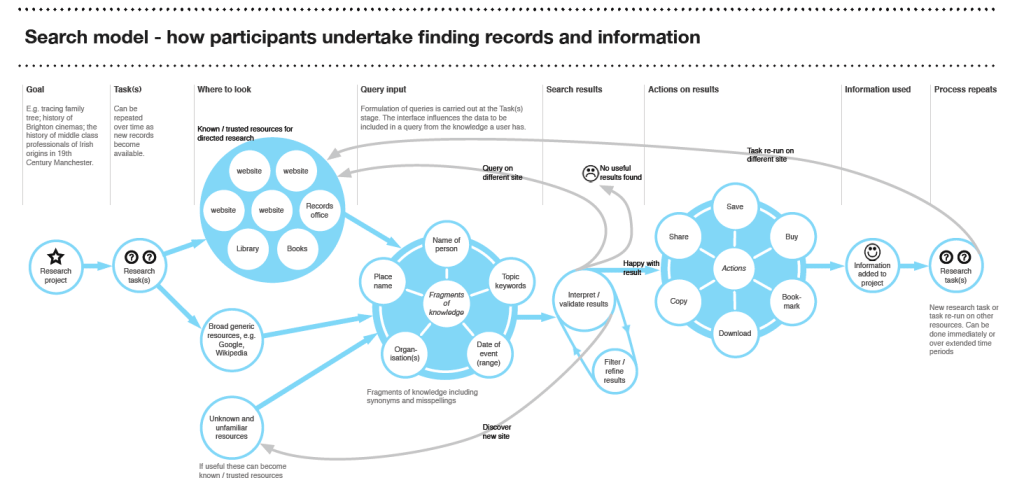
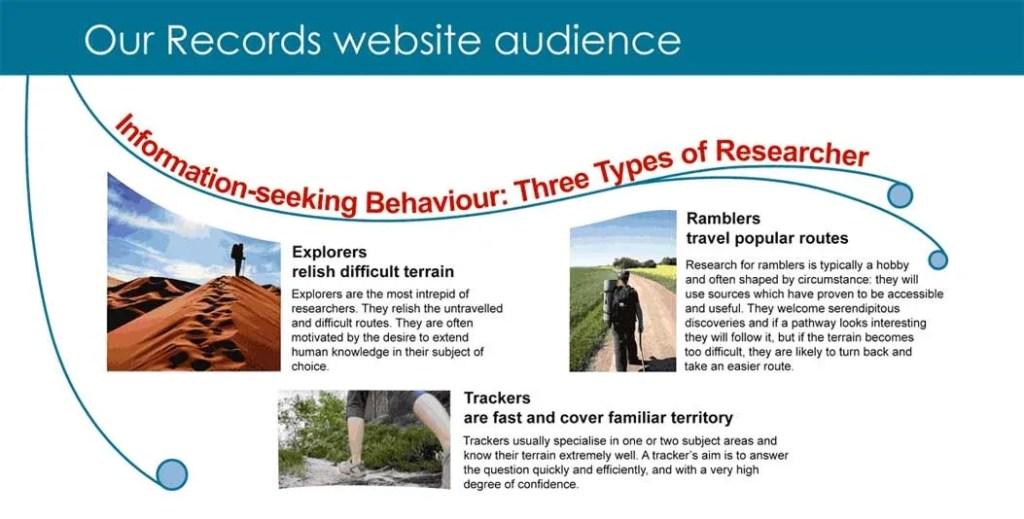
We began with in-depth research to understand the needs, pain points, and behaviours of our key user groups. This included interviews, surveys, diary studies, analytics, competitor analysis, and user testing to gather meaningful insights. To guide the design process, we developed personas representing academic researchers, legal professionals, students, and the general public. These helped ensure the design met the specific needs of each audience.
A key focus was understanding how users searched through large datasets and the expected access options. By analysing their behaviours and preferred tools, we shaped the search functionality to align with real user workflows and expectations.
Design and Development
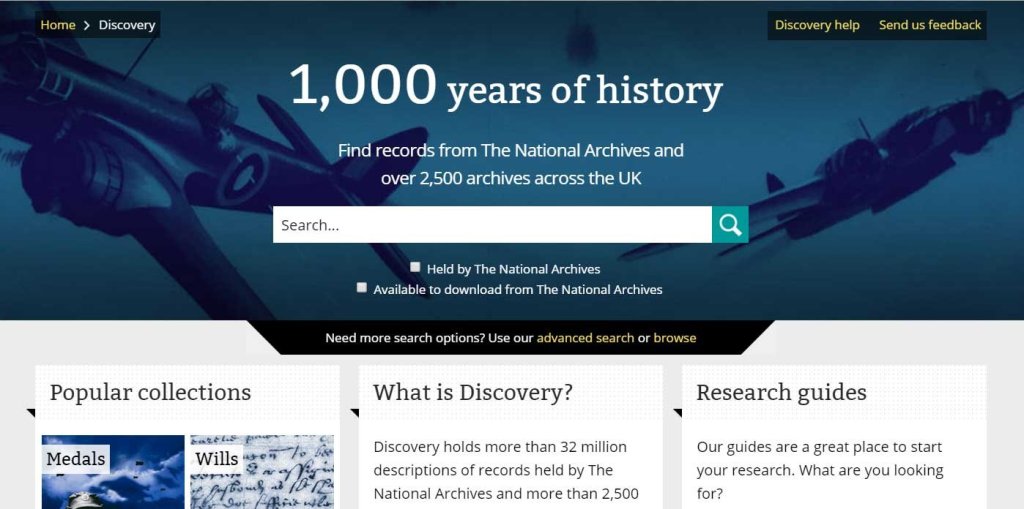
We aimed to create a sense of simplicity and familiarity by designing a large, Google-like search field. Users could easily refine their results by parameters such as date, type, and location. Alternative entry points were also provided, including subject-based research guides and archival reference browsing, to support different research approaches.
Developing the catalogue was a complex task due to the challenge of enabling users to search and explore over 32 million records from thousands of archives in a single, unified view—while maintaining accuracy and performance. Design, development, and user feedback ran in parallel, allowing datasets to be added gradually. This iterative approach helped all teams surface technical and design challenges early, and collaboratively shape effective solutions.
Help guides
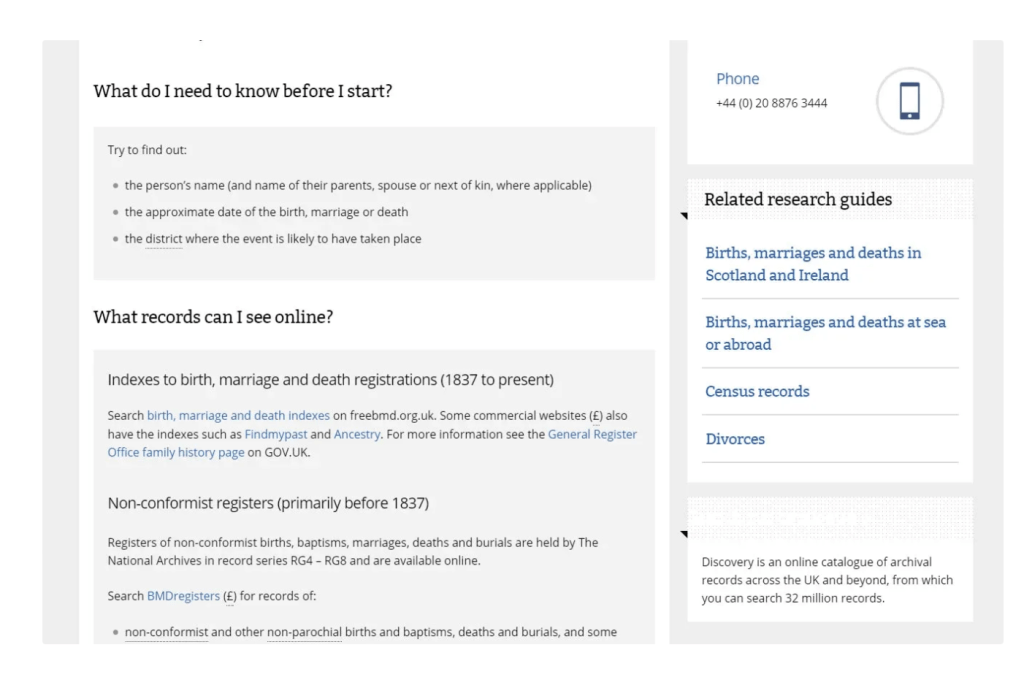
Based on user insights and observed search behaviours, we created research guides for the most popular subjects. These guides were designed to help users quickly navigate the collections, offering clear overviews of what could be accessed online, what required an onsite visit, and any associated costs.
The guides were particularly valuable for users without archival or subject expertise—especially those exploring genealogy, which saw increased interest following the popularity of Who Do You Think You Are? Many of these users, accustomed to Google-style simple keyword searches, struggled with archival systems where older records lacked detailed metadata . The guides helped bridge this gap, offering context, structure, and support to improve discoverability and reduce search frustration.
 Portfolio