Redesigning the British Library’s online presence
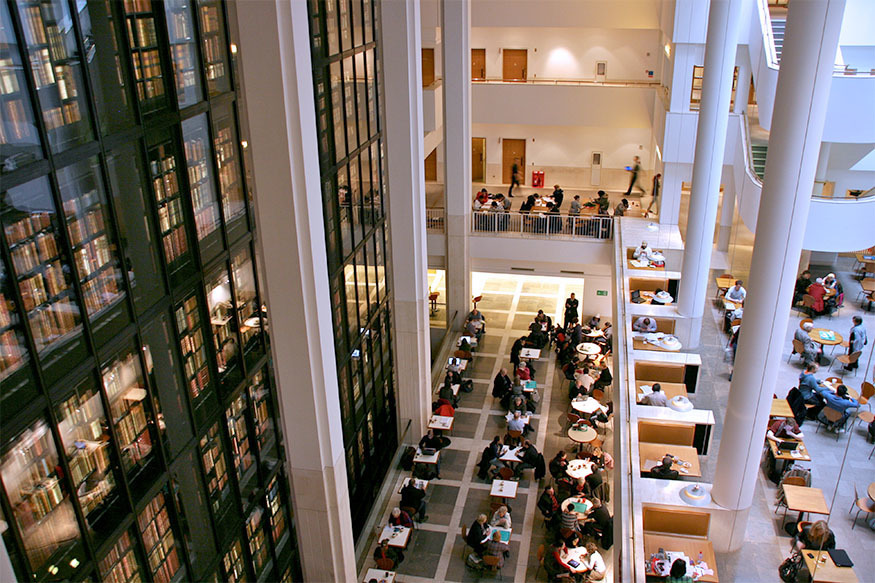
The British Library is the UK’s national library and one of the world’s largest, holding over 170 million items including books, manuscripts, maps, and digital archives. It serves as a hub for research, innovation, and culture, providing public access to vast historical and contemporary collections. The library also leads digital preservation efforts, curates exhibitions, and supports academic and business communities.
My role
As UX Manager, I led the UX design and discovery for the redesign of the British Library’s digital presence. I collaborated with stakeholders and subject matter experts to to build a streamlined, user-friendly platform. I also led multiple project to create digital exhibitions, teaching resources, help content, search and discovery patterns, digital preservation projects, streamline registration and improve document ordering workflows.
Overview
When I arrived at the Library, the website had become a sprawling, outdated digital presence. The website had expanded over time to include over 60,000 web pages, each a standalone entity that contributed to a cluttered, inefficient user experience. Visitor growth had stagnated, engagement had dropped, and revenue was at a standstill.
The British Library faced what could be described as a “Victorian Hospital” problem—numerous systems and features had been tacked on without proper integration, making the overall experience overwhelming for users. The website contained disorganised content, poor navigation, and disconnected services, all hosted on legacy systems. There were high rates of basket abandonment, and key revenue services such as the gift shop, event tickets and donation platforms, were underperforming.
The goal was to redesign the Library’s website to ensure the extensive digital collections met the Library’s aim to:
- Deliver a coherent and intuitive user experience
- Allow direct access to the breadth and depth of the digital collections
- Open up the offering to a wider UK and global audiences
- Provide specific offerings and optimised journeys for key audience groups (researchers, learners, general public and business).
- Achieve a 30% increase usage
Discovery
Data analytics review & surveys
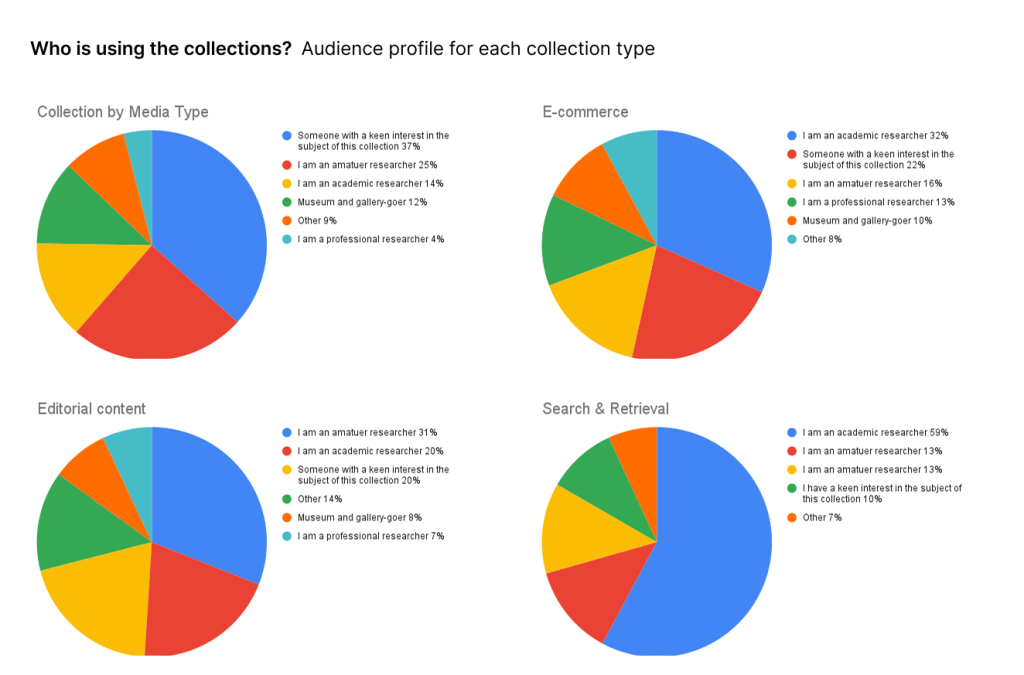
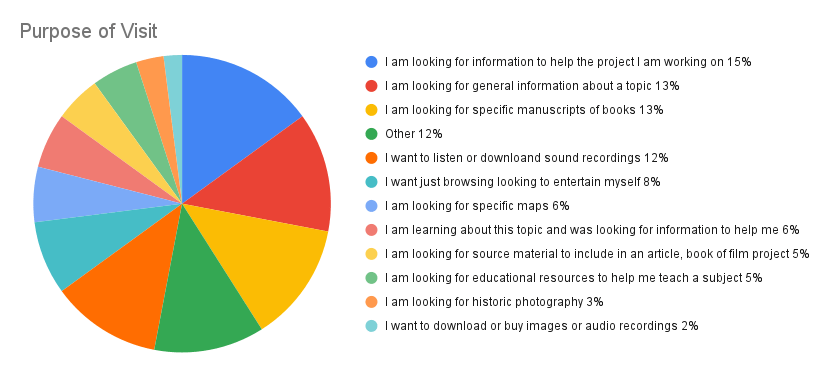
A data analytics review of the different digital collections areas was undertaken and exit surveys were integrated across the different parts of the website. The key questions I wanted to understand were:
- Who is using the collections?
- What are people using the collections for?
- What are their experiences accessing and using the collections?
- What search behaviours are used to get to the collections?
User testing
A number of 1:1 user testing sessions were conducted with participants that matched the profiles identified from the survey on the website and were carrying out research that required primary source material and could be support via the Library’s website. The tasks explored a variety of digital collections, help content and exploration of the website via the homepage.
Content audit and gap analysis
Comprehensive content audit was undertaken to identify duplicate content, outdated resources, and content that was no longer relevant. This was a pain staking task but was a necessary step in understanding and documenting the Library’s digital footprint.
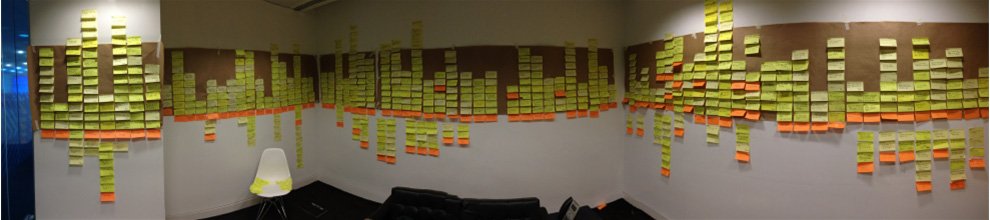
Stakeholder interviews and focus groups were conducted with internal content stakeholders to understand the process of content creation , content governance to and identify and evaluate topic for future content creation. The key discussion points were:
- Participants role in how content is created on the website
- Recent example of content creation – how it was created, the purpose, who it was for, how they know its useful to the audience, monitoring live content and any KPIs set.
- What make good content for the Library’s website
- Challenges they face creating content on the Library’s website
- Training or advice they receive on content creation
- What should be kept and what new content should be created.
Research findings
Challenges and opportunities
The research identified that there were many opportunities to engage with the large and diverse audience that found the proposition of accessing the Library’s unique collection extremely compelling. The findings also showed that interpretation and insight from the Library’s experts would significantly enhance the experience and the quality of the offerings.
There were also significant challenges with having such an extensive and varied collection, such as:
- Communicating to users what is available online for different audience types
- Supporting users to construct better search queries to get more useful results
- Providing onward journeys to enable highlight relationships and connections between items.
The challenges within the content creation process were also identified, such as:
- Audience needs were not understood and were not driving the content the was being created
- Analytics was seen as a reporting tool rather than a mechanism to drive action or change to the content
- People considered their content areas but neglected the bigger picture to tie themes and build wider relationships
- The lack of any editorial plan, process or style guides were barriers to helping people create compelling content
Search behaviours
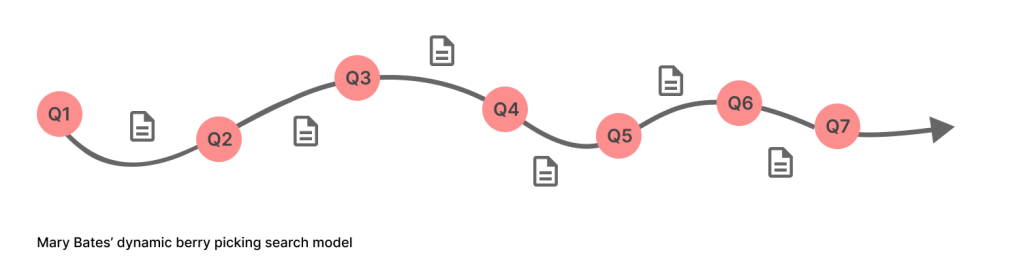
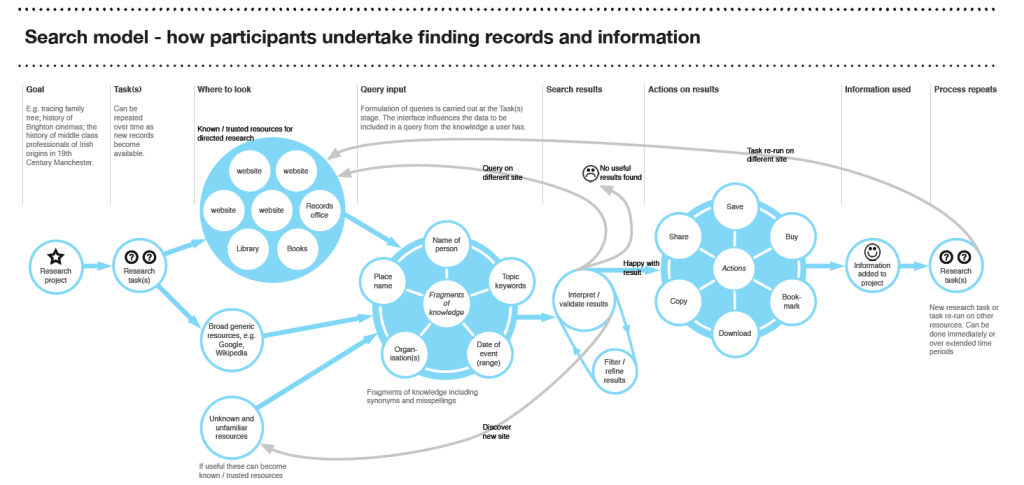
The Library’s search mechanisms were set up for information retrieval that relied on the user entering good input terms then interpreting the result set. Advanced users could navigate the process quite well but novice users struggled mainly due to lack of domain. Participants in user testing displayed search behaviours closely aligned to ‘berry picking’, where broad tentative searches led users to redefining the keywords or jumping into content that then triggered a new search based on terms presented and new knowledge gained. This pattern also conformed to Wurman’s first law which states: “You only understand something relative to something you understand. So you have to begin someplace. You have to get in. You have to open the door to some kind of understanding in people to go to the next step”.
Design new architecture for bl.uk
The research identified that the Library’s key audience types were:
- Researchers wanting to access primary source collections online and onsite in the Library’s reading rooms.
- Learners wanting a curated experiences online, for popular topics and also curriculum based resources.
- Cultural visitors wanting to experience the Library’s amazing building and attend free and paid exhibitions.
- Business owners and entrepreneurs wanting to access the Business & IP Centre for help and advice on growing and starting a business.
The website was focussed on Researchers and had some support for Learners. However, Cultural visitors and Business audience was were not being served adequately which led to confused and ultimately frustrated users.
The content audit, gap analysis and content alignment sessions allowed a skeleton structure of the site to be created. This enabled the more precise work to define the architecture of the site to support the different audience groups outside of the Researcher profile. Card sorting and tree testing activities took place with participants uncovering user mental models and suggest potential ways to organise the content.
User interviews and website path analysis revealed significant ambiguity in the main navigation labels, causing confusion and inefficient user journeys. I focused on creating clear access paths tailored to different audience types and prioritised visibility for key areas such as the Library’s events programme, gift shop, and new membership offering. A major goal was resolving user confusion around the labels —Catalogues, Collections, Discover and Services.
The new architecture simplified the navigation and moved any additional content outside of the key audience journeys was moved to the footer. User testing sessions were conducted for validation and refinement and analysis of user flows were employed for beta release.
The new navigation:
- Collections – Researchers and Academics wanting to find primary source material online or onsite.
- Learning – Lifelong learners interested in a popular topics and teachers and students wanting to access curriculum based resources.
- What’s on – Cultural visitors wanting to visit the Library’s onsite gallery and attend exhibitions and explore the building.
- Visit – General information needed when visiting the Library and requirements to view the collections
- Business Support – Business owners and entrepreneurs who want to access information on how to start or grow their business.
- Shop – People wanting to purchase merchandise and souvenirs from the Library.
- Join – People who want to support the Library via membership or donation to conservation projects (new service)

Creating a content strategy
Drawing on insights from a the content audit, user research, and collaborative workshops, we developed a content strategy grounded in a deep understanding of user needs, behaviours, and search patterns. Through alignment sessions with stakeholders and content owners, the strategy was shaped to reflect both institutional objectives and user priorities.
The primary focus was to help users quickly assess whether a resource met their needs, understand the access and ordering options, and be guided seamlessly towards related content—boosting engagement and enabling moments of serendipitous discovery. The content framework supported users arriving via high-ranking search terms and enabled smooth journeys toward meaningful action. By identifying core areas of user interest—such as, people, places, events, and objects—we tailored content to suit different visitor segments, making it easier for users to access and explore the Library’s rich collections.
Curated user journeys were designed that supported onward journeys between collection items, encouraged purchases, donations, and event ticket sales. For example, while exploring the Jane Eyre manuscript collection, users were shown related collection items and people based on themes and time periods, learning resources and if available, prompts to related exhibitions and gift shop items. People, Objects and Events were identified as central to the SEO strategy and core user experience.


Implement CMS to enable admin team to manage website and experts create content and resources
Workshops were conducted with Web admin team and subject matter experts to identify the web publishing workflows, establish house style guidelines and design the different templates to support the different content that the Library wanted to create. The new CMS was implemented and a range of flexible, robust templates were designed, built and refined over time to support the Library’s content needs.
Building interactive learning resources
One of the Library’s key aims is to get young people inspired by the UK’s literary heritage, at home and at school, and many of its selected texts support the UK curricula for GCSE, A Level and undergraduate teaching of English Literature. I collaborated closely with Learning teams to design engaging online exhibitions for schools and adult learner that highlight the unique collections at the library. Workshops were conducted with teams to create and apply taxonomies and ontologies to ensure relationships between content and user testing sessions with Teachers, students to refine and validate content and design decisions.
We understood that teachers needed curriculum-aligned content, including lesson plans, author profiles, and study guides that were easy to use in the classroom. Many teachers were particularly interested in accessing primary sources such as manuscripts and letters, as these are often not readily available in traditional textbooks. Students wanted interactive, multimedia content that brought literature to life. They expressed a desire for videos, audio clips, and interactive timelines. Students needed simplified explanations and access to resources that could help them break down complex literary texts.
We worked with teams around the Library to develop the Discovering Literature resource, which features digitised collections items, detailed explanations and essays about the various authors, works and themes in English Literature. There are also some documentary films, teaching resources and lesson plans. The resource provided different ways into the content and organised by author, themes, articles, videos, collection items and teaching resources – providing a blueprint for any new resources to be created.
The Discovering Literature site was launched by the then Education minister Elizabeth Truss said the Discovering Literature site would support the new curriculum by “helping to bring to life some of the greatest pieces of literature of our time such as Oliver Twist and Tess of the d’Urbervilles.

Outcome
The redesign of the Library’s online presence led to a 50% increase in traffic, with total visits reaching 20 million per year. SEO improvements helped the Library outrank Wikipedia for “Magna Carta” searches during its 800th anniversary, while organic search traffic grew to over 1 million visits per month. The seamless integration of the gift shop, ticket sales, and donation platforms resulted in a 30% boost in visits and revenue. Social media engagement also soared, with the Library’s Twitter following expanding from 250,000 to over 1 million. Clearer navigation, help pages and search functionality improved user experience, and transformed the Library’s website from a fragmented, outdated digital presence into a modern, cohesive, user-centric platform built to last.

 Portfolio